
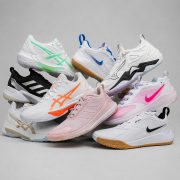
Top 10 Volleyball Shoes For Women
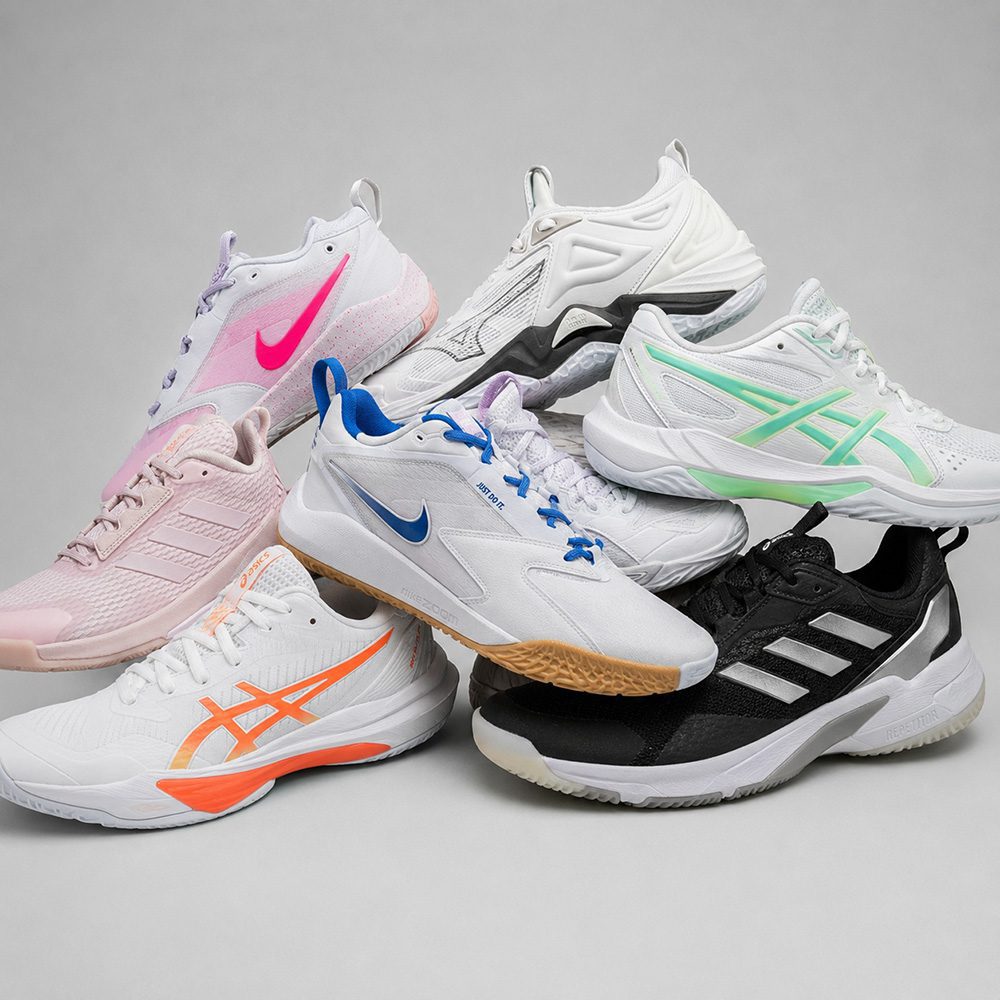
Volleyball puts a specific set of demands on footwear that running shoes and cross-trainers were not designed to meet. Lateral stability, gum-rubber traction on indoor courts, a low profile that keeps you close to the ground, and cushioning that absorbs the impact of repeated jump landings are all built into volleyball-specific shoes in ways general athletic footwear is not. Using the wrong shoe increases your risk of ankle rolls and knee strain, and it shows up in your footwork long before it shows up as an injury.
The nine shoes in this roundup represent the best options available for women in 2026, drawn from ASICS, Nike, Adidas, and Mizuno. The lineup covers every role and budget: from a solid entry-level pair for a beginner to a jump-optimised hitter shoe for a competitive outside attacker. Each product was selected based on expert consensus across current volleyball publications and confirmed Amazon availability as of May 2026.
Position matters when you choose a volleyball shoe. A libero’s needs differ from a middle blocker’s, and what works for a setter may hold back a pure attacker. The comparison table and position tags in each section are there to help you match the right shoe to the way you actually play.
Quick Picks
| Role | Product | Buy |
|---|---|---|
| Best Overall | Adidas Women’s Crazyflight 6 | Check on Amazon → |
| Best Budget | ASICS Women’s Gel-Rocket 12 | Check on Amazon → |
| Best Premium | ASICS Women’s Sky Elite FF 3 | Check on Amazon → |
At a Glance
| Product | Best For | Cushioning | Best Position | Buy |
|---|---|---|---|---|
| Adidas Crazyflight 6 | Best Overall | Lightstrike foam | All positions | Amazon → |
| ASICS Gel-Rocket 12 | Best Budget | GEL heel | All positions | Amazon → |
| Nike HyperAce 3 | Best All-Round | Air Zoom | All positions | Amazon → |
| ASICS Netburner Ballistic FF 4 | Best Stability | FF BLAST | Setters, defense | Amazon → |
| Mizuno Wave Momentum 3 | Best for Liberos | ENERZY + Wave plate | Libero, defense | Amazon → |
| Adidas Novaflight 2 | Best Lightweight | Bounce | Libero, outside hitter | Amazon → |
| ASICS Sky Elite FF 3 | Best for Hitters | FF BLAST+ | Outside hitter, opposite | Amazon → |
| ASICS Gel-Rocket 11 | Best Mid-Range Training | GEL | All positions | Amazon → |
| Nike HyperAce 3 SE | Best for Style | Air Zoom | All positions | Amazon → |
1. Adidas Women’s Crazyflight 6 – Best Overall
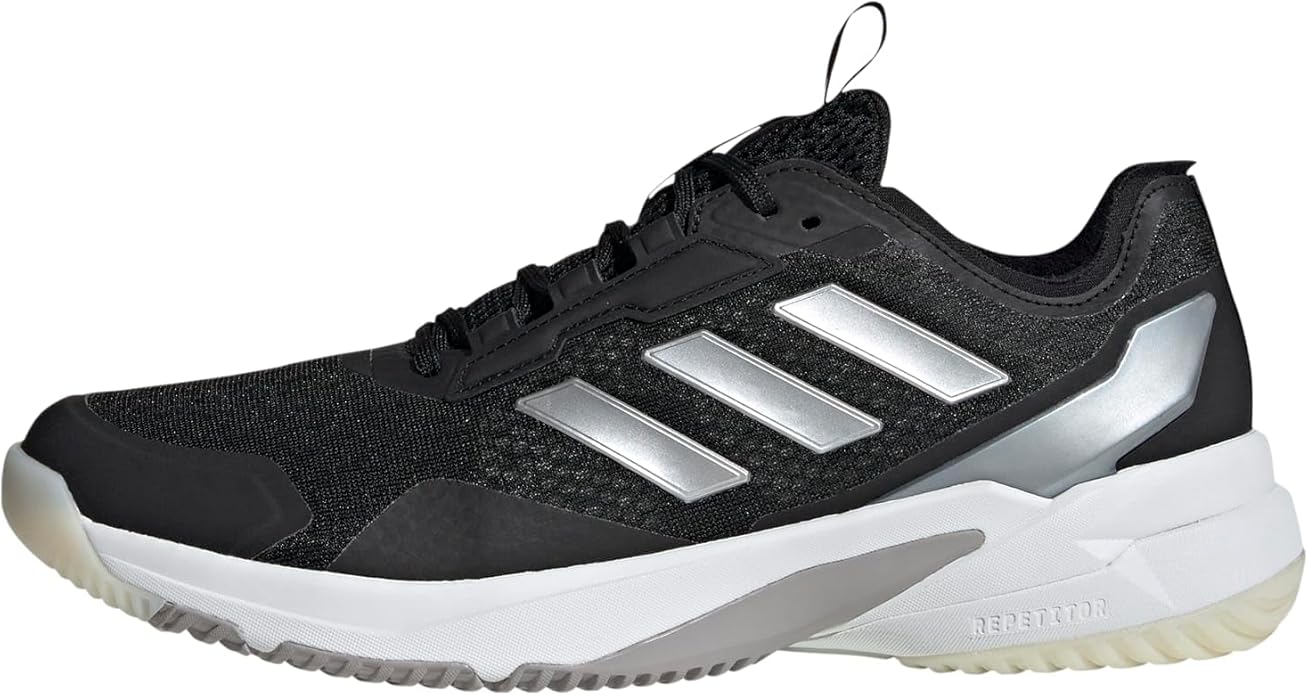
The Crazyflight 6 earns its spot at the top of this list because it works for every position on the court. Adidas built this shoe around Lightstrike foam, which keeps the midsole light while still absorbing the repeated impact of serve-receive, blocking, and attack approaches. The Continental rubber outsole gives you confident traction on most indoor gym surfaces, whether the floor is new or worn.
The knit upper wraps snugly around your foot, which reduces in-shoe movement during lateral cuts and directional changes. Some players find it runs slightly narrow out of the box, so if you have wider feet, order a half size up and try them before a competitive match.
Where the Crazyflight 6 stands out is its balance: it is not the absolute lightest shoe here, nor does it offer the deepest cushioning for serious attackers, but it does everything well. That makes it the safest recommendation for a player who is not sure what position she will settle into, or for a coach buying shoes for a squad with mixed roles.
| ✓ Pros | ✗ Cons |
|---|---|
| Lightstrike foam keeps weight low without sacrificing court feel | Runs slightly narrow; order half a size up if you have wider feet |
| Continental rubber outsole grips reliably on most indoor surfaces | Not the best option if you need maximum jump cushioning for heavy attacking work |
| Works for all positions without obvious trade-offs | |
| Snug knit upper holds the foot well during lateral movement | |
| One of the most-cited best overall picks across 2026 expert roundups |
2. ASICS Women’s Gel-Rocket 12 – Best Budget
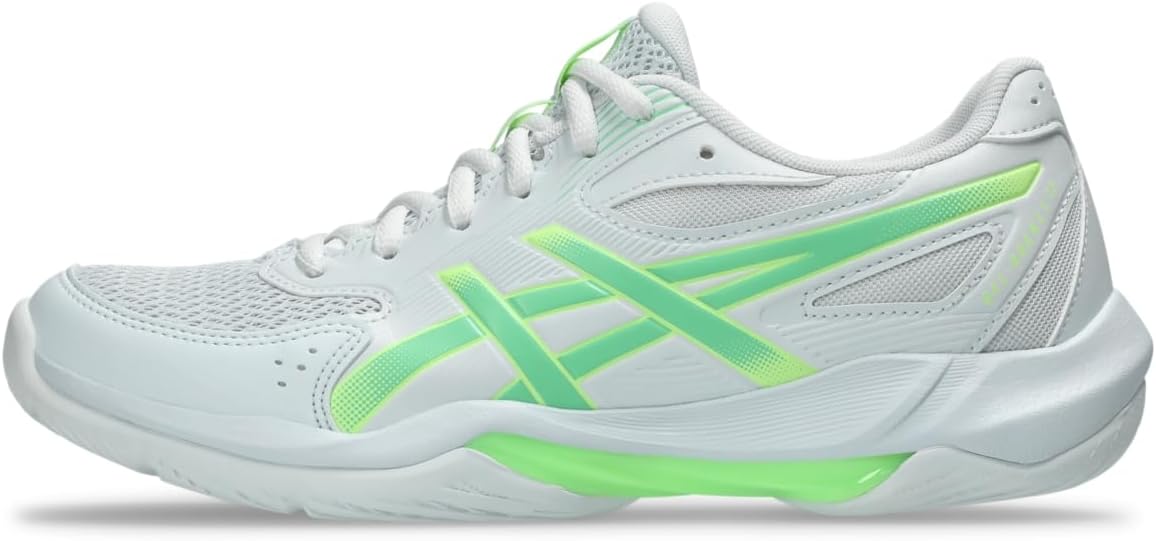
The Gel-Rocket series has been a reliable entry point for volleyball players for years, and the Gel-Rocket 12 continues that tradition. GEL cushioning in the heel absorbs shock during landing and long training sessions, and the non-marking outsole keeps gym floors scratch-free. At its price point, it is hard to find a dedicated volleyball shoe that covers the basics this well.
The synthetic mesh upper provides decent ventilation and holds its shape through regular wear. The lateral support is basic compared to mid-range options like the Gel-Rocket 11 or the Netburner Ballistic, but it is enough for recreational and beginner-level play where you are not making elite-speed cuts or heavy approach jumps.
This shoe is the right pick if you are new to volleyball and not ready to commit to a premium price, or if you play recreationally once or twice a week and want something built for the court rather than a repurposed running shoe. ASICS Gel-Rocket shoes also tend to fit true to size, which makes online ordering more straightforward.
| ✓ Pros | ✗ Cons |
|---|---|
| One of the most affordable dedicated volleyball shoes available | Lateral support is basic; not ideal for advanced footwork patterns |
| GEL heel cushioning provides genuine impact absorption | Synthetic upper wears faster under daily high-intensity use |
| Non-marking outsole is approved for gym floors | |
| Fits true to size, reliable for online ordering | |
| Good ventilation for long practice sessions |
3. Nike Women’s HyperAce 3 – Best for All-Round Court Performance
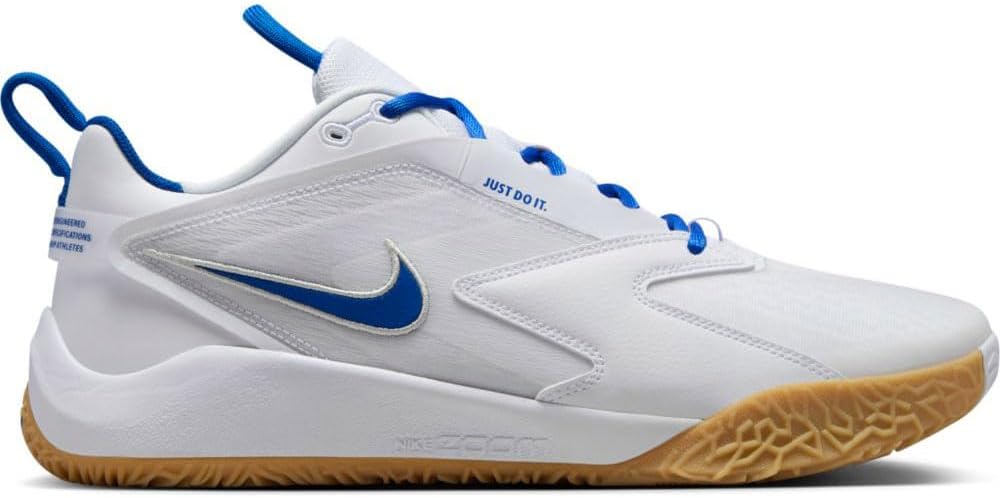
The HyperAce 3 is a significant improvement over the HyperAce 2 that many players will remember. Nike widened the toe box and added a full Air Zoom unit underfoot, which gives you a noticeably more responsive feel when you push off the ground. Players transitioning from running shoes often find the HyperAce 3 familiar enough to feel comfortable on day one but purpose-built enough to feel different under hard cutting.
The herringbone traction pattern works on a wide range of indoor surfaces, from polished competition floors to older gym vinyl. The shoe fits broadly, accommodating most foot shapes without the narrow squeeze that some volleyball-specific models enforce. That broad fit makes it a practical all-rounder for players who cover multiple positions.
If you want one shoe that works for setting, defensive digging, and attacking approaches without forcing you to specialise, the HyperAce 3 is the most sensible choice in this list. It does not excel in any single area the way the Sky Elite FF 3 does for hitters or the Wave Momentum 3 does for liberos, but it covers the whole game competently.
| ✓ Pros | ✗ Cons |
|---|---|
| Air Zoom cushioning is responsive and comfortable across long sessions | Not the best specialised option for pure attackers or pure liberos |
| Wider toe box fits most foot shapes well | Slightly heavier than the Novaflight 2 or Crazyflight 6 |
| Herringbone outsole performs on a wide variety of indoor surfaces | |
| All-position versatility; suitable for any role on the court | |
| Clear upgrade over the HyperAce 2 in both fit and cushioning |
4. ASICS Women’s Netburner Ballistic FF 4 – Best for Stability
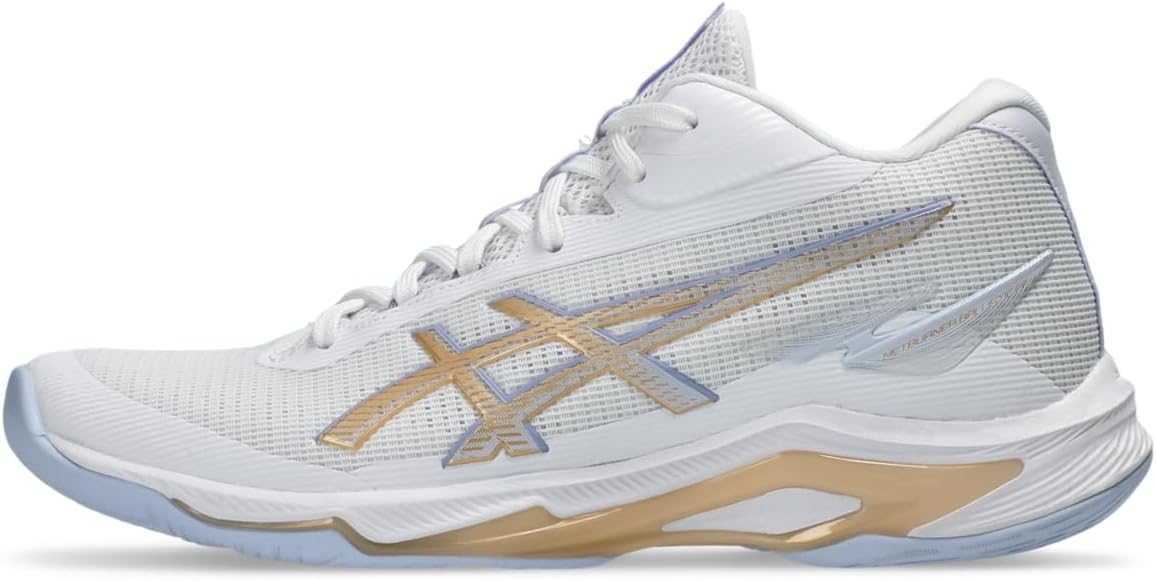
The Netburner Ballistic FF 4 is the stability specialist in this lineup. The mid-top collar gives your ankle extra containment during the sharp lateral cuts that setters and defensive all-rounders make on nearly every rally. ASICS reinforced this with the TRUSSTIC System, a rigid shank built into the midfoot that resists torsional flex and keeps your foot tracking straight when you plant and change direction.
FF BLAST foam sits in the midsole, providing a cushioned but responsive platform that does not feel sluggish underfoot. The AHAR+ outsole is one of the most durable rubber compounds ASICS uses, so this shoe holds up under intense training loads that would wear through lighter options faster. The added weight from the mid-top construction is real, but for the stability it delivers, the trade-off is worth it.
Setters who make repeated lateral slides to cover the net and defensive all-rounders who need confident foot placement will find this shoe genuinely useful. It is also a good fit for players who have previously rolled an ankle and want more containment on court, or for those returning from minor injuries where the freedom of a low-top is not advisable.
| ✓ Pros | ✗ Cons |
|---|---|
| Mid-top collar provides meaningful ankle containment | Heavier than low-top options; noticeable for speed-focused players |
| TRUSSTIC System resists torsional flex during lateral cuts | Mid-top design limits ankle range of motion slightly |
| FF BLAST midsole is cushioned and responsive | |
| AHAR+ outsole is highly durable under intense training loads | |
| Well-suited to setters and defensive specialists |
5. Mizuno Women’s Wave Momentum 3 – Best for Liberos
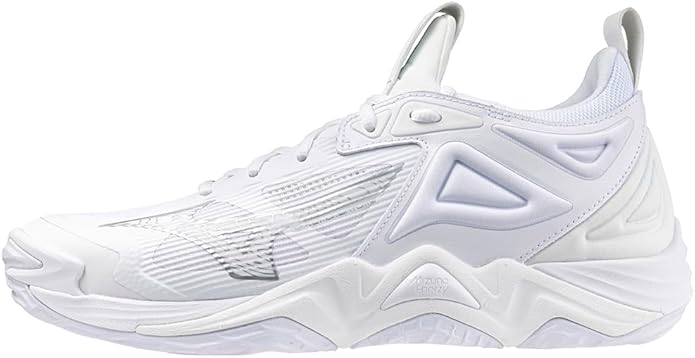
The Wave Momentum 3 is the most libero-specific shoe in this list. Mizuno’s DynamotionFit bootie construction wraps the foot in a glove-like fit that minimises looseness inside the shoe, which is exactly what you want when you are diving, scrambling, and changing direction constantly to cover the back court. There is very little separation between foot and floor, which helps you feel the court and react quickly.
ENERZY foam in the midsole is lighter and more elastic than older Mizuno compounds, so the Wave Momentum 3 does not feel as heavy as earlier Wave series shoes. The Wave plate provides structural support and energy return, and the MICHELIN rubber outsole is one of the grippiest compounds used in any volleyball shoe at this level. On clean indoor courts, the traction is excellent.
If you are a libero or a defensive specialist who values floor feel above all else, this is the most purpose-built option here. It is not the right shoe for attackers who need more cushioning depth under the forefoot for repeated jump landings, but for a player whose game is about reading the court and moving fast, the Wave Momentum 3 fits that role better than anything else in this lineup.
| ✓ Pros | ✗ Cons |
|---|---|
| DynamotionFit bootie delivers a secure, low-gap fit | Not cushioned enough for heavy attackers who jump frequently |
| MICHELIN rubber outsole provides excellent grip on clean indoor surfaces | Tight bootie fit can feel restrictive for players with wider feet |
| ENERZY foam is lighter and more responsive than previous Mizuno compounds | |
| Low profile gives a direct court feel that liberos prefer | |
| Wave plate adds structural support without bulk |
6. Adidas Women’s Novaflight 2 – Best Lightweight Option
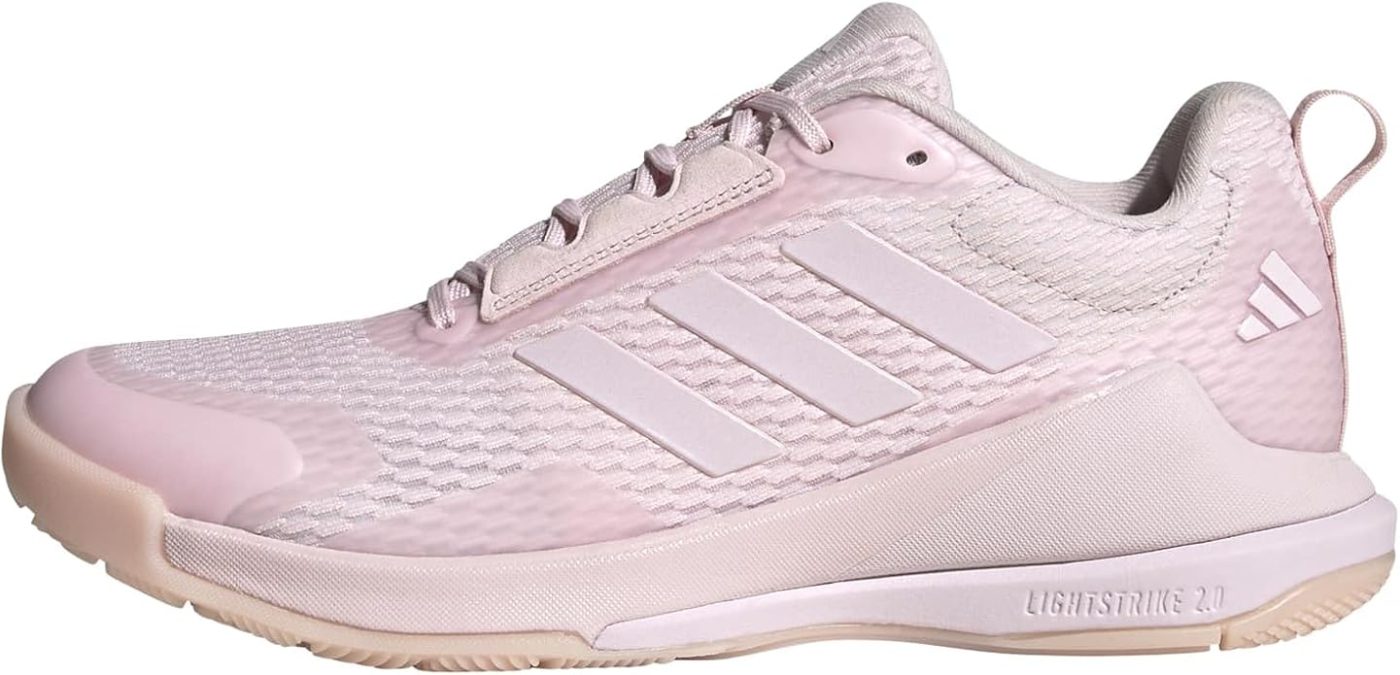
The Novaflight 2 is the lightest shoe in this lineup, and you feel it the moment you pick it up. Adidas used a featherweight knit upper paired with Bounce cushioning to strip weight without making the shoe feel hollow or unprotected. The result is a shoe that moves with your foot rather than feeling like something strapped to it, which is a real advantage if your game is built around speed and quick court coverage.
Bounce cushioning sits at the lower end of midsole thickness compared to Lightstrike or Air Zoom setups, so the ground feel is immediate and direct. For a libero or an outside hitter who covers a lot of ground between rallies, that low-to-ground profile works well. For a middle blocker who absorbs heavy landings from max-height jumps, this shoe would not provide enough impact protection.
The Novaflight 2 works well as a secondary shoe if you already own a heavier-cushioned option for match play and want something nimble for training. It also suits players who find traditional volleyball shoes feel bulky or stiff compared to their regular athletic footwear. Just be aware that knit uppers tend to wear out faster than synthetic ones under daily use.
| ✓ Pros | ✗ Cons |
|---|---|
| Lightest shoe in this roundup; noticeably quick on foot | Not cushioned enough for heavy attackers with high jump frequency |
| Bounce cushioning keeps weight low while providing basic shock absorption | Knit upper wears faster than synthetic alternatives under daily training |
| Low-to-ground profile suits liberos and speed-focused players | Less lateral support than mid-range or stability-focused options |
| Flexible knit upper adapts to foot shape naturally | |
| Good option for players who find traditional volleyball shoes too bulky |
7. ASICS Women’s Sky Elite FF 3 – Best for Hitters
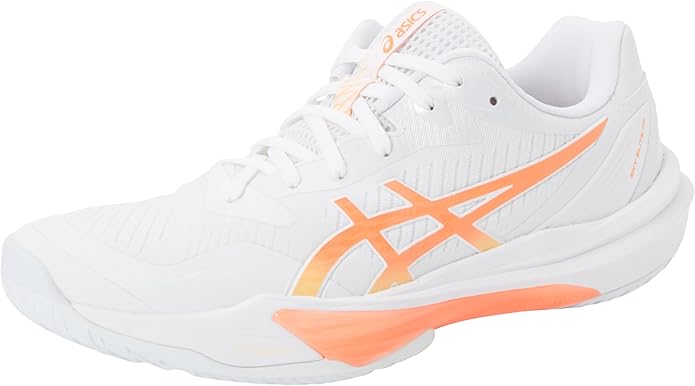
The Sky Elite FF 3 is built specifically for the demands of attacking volleyball. FF BLAST+ foam in the midsole is ASICS’s highest-performance cushioning compound, designed to absorb and return energy from the repeated full-approach jumps that outside and opposite hitters execute throughout a match. The curved heel geometry promotes forward drive at takeoff, which experienced hitters will feel as a more fluid transition from approach to jump.
A reinforced toe cap protects the area most likely to take scuff damage during approach footwork, and the AHAR outsole provides durable traction on hard indoor courts. The fit is precise, which is typical of high-performance ASICS shoes: there is very little wasted space inside, and the shoe holds the foot firmly through the rapid direction changes that precede an attack approach.
If you are an outside or opposite hitter who trains four or more days per week and makes a high volume of approach jumps, the Sky Elite FF 3 justifies its price. Recreational players or setters who rarely jump offensively will find the extra cushioning depth unnecessary, and the firmer fit may feel less comfortable for all-day training than more versatile options. This is a specialised shoe and it works best when used for that specialisation.
| ✓ Pros | ✗ Cons |
|---|---|
| FF BLAST+ foam delivers premium cushioning for high-jump athletes | Specialised design is overkill for non-attackers |
| Curved heel geometry encourages an efficient attack approach | Firm fit can feel tight for players with wider feet |
| AHAR outsole is durable under hard court conditions | Premium price is not justified for recreational play |
| Reinforced toe cap adds longevity in the highest-wear zone | |
| Firm, precise fit holds the foot well through approach footwork |
8. ASICS Women’s Gel-Rocket 11 – Best Mid-Range Training Shoe
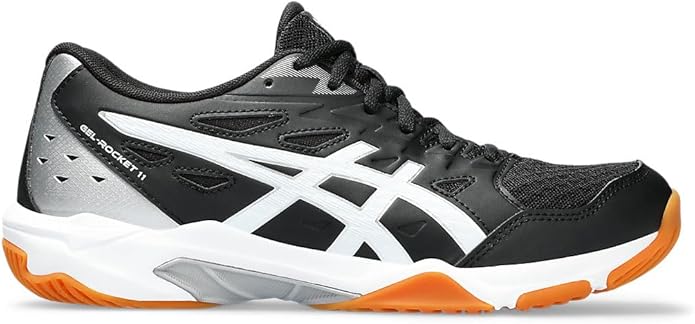
The Gel-Rocket 11 sits in a useful gap in the ASICS lineup: more supportive than the Gel-Rocket 12 but less specialised than the Netburner Ballistic FF 4 or the Sky Elite FF 3. GEL cushioning handles impact across the heel, and the non-marking outsole keeps gym floors clean. For a club player who trains four or five days per week and wants a shoe that holds up through regular use without a high price tag, the Gel-Rocket 11 delivers.
The lateral support is noticeably better than the Gel-Rocket 12, with a slightly firmer midsole that does not compress as much under quick lateral changes. The synthetic upper is more durable than a knit construction and keeps its shape longer under repeated use. Ventilation is adequate for indoor training but not outstanding, so players who run hot may prefer mesh alternatives.
This is a particularly good option for club or school team players who go through two or three pairs of shoes per season and need reliable performance without spending at the premium tier. It is also a practical first upgrade for players who have been using budget shoes and want meaningful lateral support and cushioning for heavier training loads.
| ✓ Pros | ✗ Cons |
|---|---|
| Practical mid-range price bracket for regular training use | Less specialised than stability or hitter-specific options |
| More lateral support than the Gel-Rocket 12 while staying affordable | Ventilation is adequate but not exceptional |
| Synthetic upper is durable under regular training use | GEL technology lags behind FF BLAST compounds in responsiveness |
| GEL cushioning handles impact well during long sessions | |
| Non-marking outsole is gym-floor safe |
9. Nike Women’s HyperAce 3 SE – Best for Style-Conscious Players
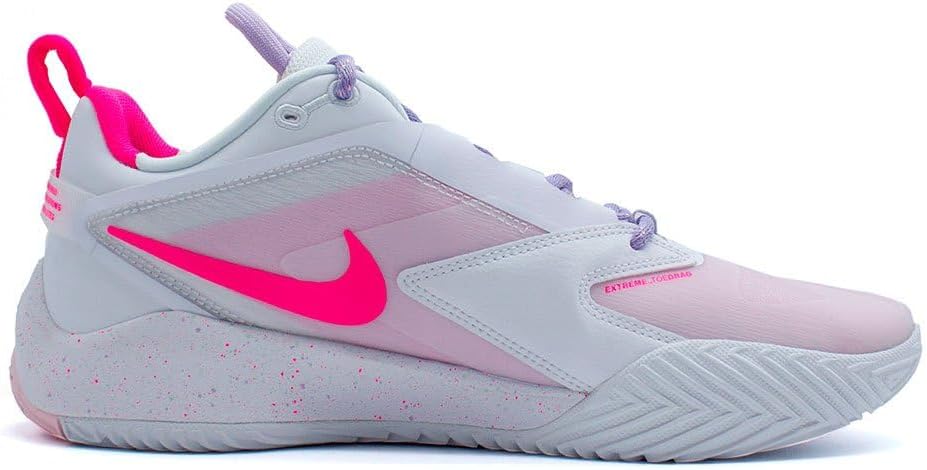
The HyperAce 3 SE shares every performance spec with the standard HyperAce 3: the same Air Zoom cushioning, the same herringbone outsole, and the same widened toe box that makes the HyperAce 3 one of the more comfortable all-round volleyball shoes in 2026. The only difference is the colorway. Nike designed the SE editions for players who want bold, court-ready aesthetics or who need to match a specific team colour scheme.
From a pure performance standpoint, everything said about the HyperAce 3 applies here. The Air Zoom unit is responsive underfoot, the herringbone pattern grips reliably across indoor surfaces, and the broader fit accommodates most foot shapes without significant break-in time. The SE designation does not affect weight, cushioning depth, or support in any way.
If you play regularly, choose the SE over the standard HyperAce 3 only if the colorways appeal to you or match your team kit. If you are buying as a gift for a player who has not yet tried the HyperAce 3, the SE colorways make the shoe feel more premium out of the box. Either way, you are getting a solid all-round volleyball shoe.
| ✓ Pros | ✗ Cons |
|---|---|
| Same proven Air Zoom and herringbone performance as the HyperAce 3 | No performance advantage over the standard HyperAce 3 |
| SE colorways suit team colour matching or personal style preferences | SE colorways may not align with every team uniform |
| Broad toe box fits most foot shapes well | |
| Good gift option for players at any level | |
| No performance trade-off compared to the standard version |
Frequently Asked Questions
Can I use running shoes for volleyball?
Running shoes are built for straight-line forward motion and do not provide the lateral support that volleyball requires. They also tend to sit higher off the ground, which reduces stability during quick directional changes. Using running shoes long-term on a volleyball court increases your risk of ankle rolls and reduces your court feel. A dedicated volleyball shoe makes a noticeable difference from your first session.
How long do volleyball shoes typically last?
Most volleyball shoes last between six and twelve months of regular use, depending on how many sessions per week you train. A club player training four to five times per week will typically reach the replacement point by the end of a season. Signs of wear include reduced grip on the outsole, a compressed midsole that no longer cushions as it did, and visible heel or toe damage. Rotating between two pairs extends the lifespan of both.
What is the difference between low-top and mid-top volleyball shoes?
Low-top volleyball shoes prioritise speed and court feel. They are lighter and allow a full range of ankle motion, which suits liberos and speed-focused players. Mid-top volleyball shoes add a collar above the ankle that provides extra containment during lateral cuts, which benefits setters and defensive all-rounders who make frequent direction changes. The trade-off is slightly more weight and less ankle freedom. Neither design prevents ankle injuries on its own; technique and court awareness matter more.