
Best Beach Volleyballs: 6 Top Picks for Every Player (2026)
SEO: Find the best beach volleyball for your level. We compare FIVB and AVP official balls, mid-range options, and budget picks with honest reviews. | Keyword: best beach volleyball
DOCUMENT METADATA
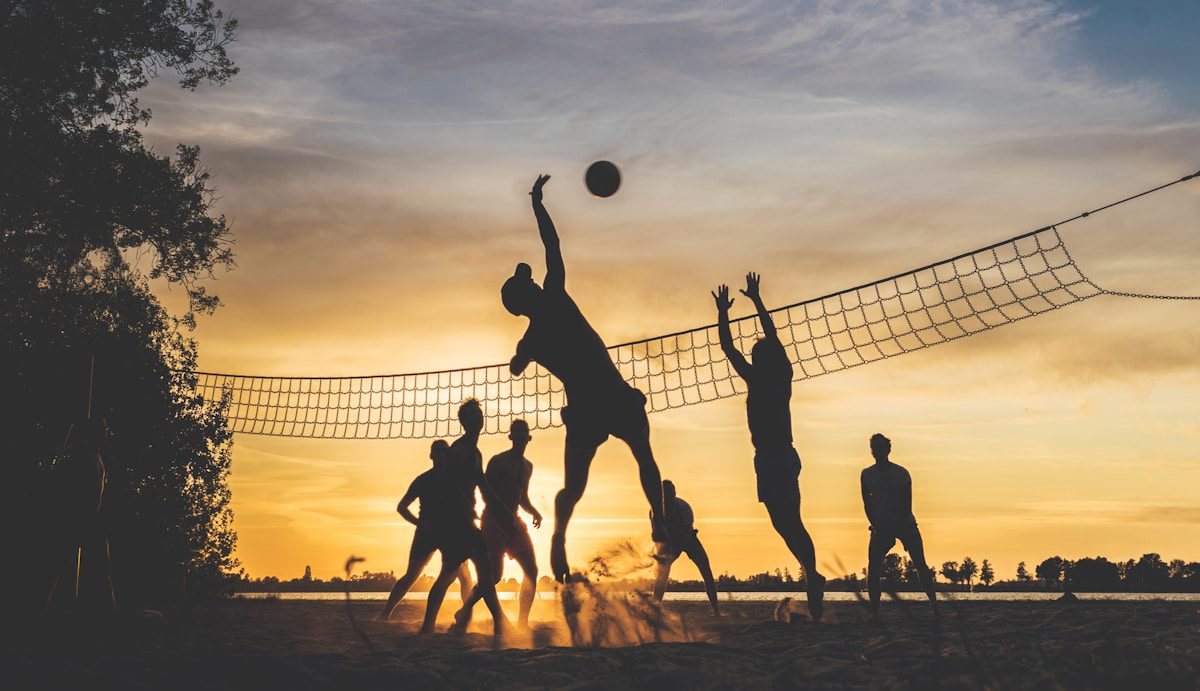
You show up at the beach, the net is set, everyone is fired up — and then someone pulls out a half-deflated ball that feels like kicking a watermelon. We’ve all been there. The ball you play with matters more than people think: it affects how hard you can dig, how much spin you can read, and whether your arms survive a two-hour session.
The beach volleyball market has changed significantly since 2023. Mikasa has replaced the iconic VLS300 with the BV550C Beach Pro as the new FIVB official game ball, and Wilson has updated its AVP line with improved visual-spin technology. Whether you’re competing in a club tournament or just want a solid ball for weekend sessions, the options are better — and more confusing — than ever.
We’ve tested and compared six of the best beach volleyballs available in 2026, covering everything from FIVB competition balls to beginner-friendly options under $25. Here’s what you need to know.
Quick Picks: Best Beach Volleyballs at a Glance
| Best Overall: | Mikasa BV550C Beach Pro | Check Price → |
| Best US Competition: | Wilson OPTX AVP | Check Price → |
| Best Premium: | Mikasa King of the Beach Miramar | Check Price → |
| Best Mid-Range: | Molten BV5000 Elite | Check Price → |
| Best for Beginners: | Wilson AVP Soft Play | Check Price → |
| Best Budget: | GoSports Pro Series | Check Price → |
Full Comparison Table
| Product | Best For | Price | Stars | Buy |
|---|---|---|---|---|
| Mikasa BV550C Beach Pro | Best Overall | $80–$120 | ★★★★★ | Amazon → |
| Wilson OPTX AVP | Best US Competition | $70–$100 | ★★★★★ | Amazon → |
| Mikasa King of the Beach Miramar | Best Premium | $55–$80 | ★★★★★ | Amazon → |
| Molten BV5000 Elite | Best Mid-Range | $45–$65 | ★★★★☆ | Amazon → |
| Wilson AVP Soft Play | Best for Beginners | $15–$25 | ★★★★☆ | Amazon → |
| GoSports Pro Series | Best Budget | $15–$25 | ★★★★☆ | Amazon → |
How to Choose a Beach Volleyball
Not all beach volleyballs are created equal. Here are the specs that actually matter when you’re picking one out.
Size and Weight
FIVB rules require a circumference of 66–68 cm (26–27 inches) and a weight of 260–280 grams (9.2–9.9 oz). Every ball on this list meets that spec. The difference is in how the weight is distributed and how the cover material affects touch.
Internal Pressure (PSI)
Beach volleyballs run softer than indoor balls — typically 2.5–3.2 PSI compared to 4.3 PSI for indoor. This softer feel is intentional: it gives you more control on digs and makes overhead play more comfortable. Don’t over-inflate a beach ball or it will feel like slapping concrete.
Panel Construction
Competition balls use 18 hand-sewn panels — more seams means more consistent flight and better feel when the ball is struck at an angle. Recreational balls often use 8 machine-stitched panels, which is fine for casual play but you’ll notice the difference at higher intensity.
Cover Material
Look for composite or synthetic leather covers treated for moisture resistance. Sand and saltwater are the enemies of a ball’s surface. Cheaper balls absorb moisture quickly and become heavy; quality covers shed water and stay light. The Mikasa BV550C’s dimpled surface is the current best-in-class solution for this.
Competition vs Recreational
If you’re playing in AVP or FIVB events, you need the official ball for that circuit. If you’re playing club or recreational volleyball, anything in the mid-range or above will serve you well. Only buy a budget ball if you’re just getting started or buying for a group where one or two balls will take abuse.
Mikasa BV550C Beach Pro — Best Overall
⚠️ Image not uploaded — add manually: https://images-na.ssl-images-amazon.com/images/P/B0CG1NF1SS.jpg | Alt: Mikasa BV550C Beach Pro — FIVB Official Game Ball
The BV550C is the ball that matters most in competitive beach volleyball right now. It replaced the long-serving VLS300 as the official FIVB Beach Pro Tour game ball, and the upgrade is immediately noticeable. The dimpled surface gives you a grip and touch that felt genuinely different from its predecessor — particularly on tips and emergency digs where contact is brief and placement matters.
Mikasa made the cover from recycled nylon synthetic leather, and the new valve system is designed to physically lock out sand — a real pain point for players who’ve watched their old VLS300 valve clog after a few sessions. The ball holds pressure consistently over time, which matters when you’re using the same ball across multiple matches in a tournament.
At $80–$120, this is not a casual player’s ball. But if you’re competing at any serious level — AVP club, FIVB qualifiers, NVL — this is the ball your matches will be played with, so it’s the ball you should be practising with.
| Brand | Mikasa |
| Certification | FIVB Official Beach Pro Tour Game Ball |
| Cover | Recycled nylon synthetic leather, dimpled surface |
| Valve | Sand-lock system |
| Best for | Competitive players, clubs, FIVB tournaments |
| Price range | $80–$120 |
| ✓ Pros | ✗ Cons |
|---|---|
| Official FIVB Beach Pro Tour ball | Premium price point |
| Dimpled surface for superior touch | Overkill for casual/recreational use |
| Sand-lock valve prevents clogging | |
| Eco-friendly recycled materials | |
| Consistent pressure retention |
Wilson OPTX AVP Game Volleyball — Best for US Competition
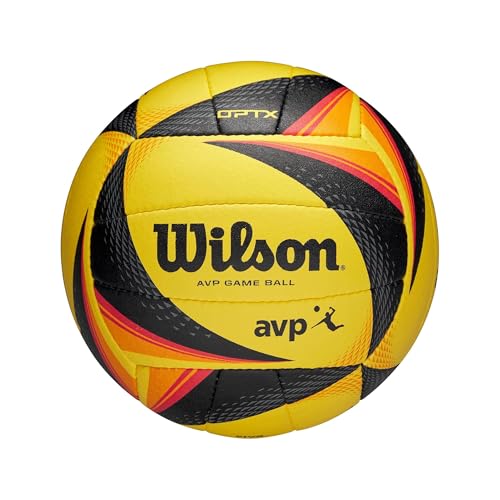
If your game is on the AVP circuit — or you’re playing in domestic US tournaments that use the AVP ball — the OPTX is what you need. Wilson’s Visual Spin Technology (VST) is the standout feature: the Optic Flow graphics use strategic colour variance to make spin far more readable than it was on older Wilson balls. When you’re reading a hard-driven ball in bright sunlight, that visibility boost is real.
The 18-panel microfiber composite cover plays well in heat and humidity, and the hand-sewn construction gives it a touch quality closer to the Mikasa than the wide gap you used to see between the two brands. Wilson has closed the competition gap significantly.
Worth noting: Wilson has also released the newer AVP Arx, which is worth watching as it gains tour adoption. For now, the OPTX remains the established competition standard for US domestic play.
| Brand | Wilson |
| Certification | AVP Official Game Ball |
| Cover | 18-panel microfiber composite |
| Technology | VST Visual Spin Technology |
| Best for | US competition, AVP tournaments, serious players |
| Price range | $70–$100 |
| ✓ Pros | ✗ Cons |
|---|---|
| Official AVP tour game ball | Not the FIVB official ball |
| VST makes spin genuinely easier to read | Premium price for competition-level quality |
| Excellent visibility in bright outdoor conditions | |
| 18-panel hand-sewn construction | |
| Strong brand familiarity in the US |
Mikasa King of the Beach Miramar — Best Premium Alternative
⚠️ Image not uploaded — add manually: https://images-na.ssl-images-amazon.com/images/P/B0CT4RFXQB.jpg | Alt: Mikasa King of the Beach Miramar Volleyball
Designed by Olympian and world champion Sinjin Smith, the King of the Beach Miramar has always had a strong following among serious recreational and club players who want competition-level quality without the full FIVB official price tag. The current Miramar model is the one to buy.
The SandTech composite leather cover has a protective acrylic coating that genuinely resists moisture and dirt better than most balls at this price. The hand-stitching quality shows — this ball has excellent shape retention after extended use. The 100% butyl bladder is a premium spec at this price point, and it shows in how consistently the ball holds pressure across sessions.
This is the ball to reach for if you play seriously but aren’t competing in official FIVB or AVP events. It trains and plays like a competition ball without requiring you to treat it like precious equipment.
| Brand | Mikasa / King of the Beach |
| Designed by | Sinjin Smith (Olympian & World Champion) |
| Cover | SandTech composite leather with acrylic coating |
| Bladder | 100% butyl for superior air retention |
| Best for | Serious recreational, club play, training |
| Price range | $55–$80 |
| ✓ Pros | ✗ Cons |
|---|---|
| Hand-stitched premium construction | Not an official tour ball |
| Superior moisture/dirt resistance | Slightly less visibility than Wilson OPTX |
| 100% butyl bladder holds pressure well | |
| Strong pedigree and brand story | |
| Good value vs full competition balls |
Molten BV5000 Elite Beach Volleyball — Best Mid-Range
⚠️ Image not uploaded — add manually: https://images-na.ssl-images-amazon.com/images/P/B01BWKGZN2.jpg | Alt: Molten BV5000 Elite Beach Volleyball — USA Volleyball Official
The Molten BV5000 is the official ball of USA Volleyball and NORCECA, which makes it a common sight at domestic club tournaments and collegiate events. If you play in that ecosystem, you’ll have played with this ball — which is reason enough to train with it.
The hand-stitched polyurethane cover has a softer, more textured feel than the Mikasa competition balls. Some players prefer this — it feels slightly more forgiving on hard contacts, especially for players coming from indoor who find the firm beach ball touch aggressive at first. The 1-year manufacturer warranty is a genuine differentiator at this price point; most balls at $45–$65 don’t offer that coverage.
It ships deflated, so you’ll need a pump. The bright red/blue or neon yellow/blue colourways are highly visible, which helps tracking outdoors.
| Brand | Molten |
| Certification | USA Volleyball Official, NORCECA Official |
| Cover | Hand-stitched polyurethane |
| Warranty | 1-year manufacturer warranty |
| Best for | Club players, collegiate practice, competitive recreational |
| Price range | $45–$65 |
| ✓ Pros | ✗ Cons |
|---|---|
| Official USA Volleyball & NORCECA ball | Ships deflated — need a pump |
| Hand-stitched PU cover with good texture | Not the FIVB or AVP official ball |
| 1-year manufacturer warranty | |
| High-visibility colourways | |
| Great mid-range value |
Wilson AVP Soft Play — Best for Beginners & Recreation
⚠️ Image not uploaded — add manually: https://images-na.ssl-images-amazon.com/images/P/B0C78TXXYV.jpg | Alt: Wilson AVP Soft Play Volleyball — Best for Beginners
If you’ve ever taught someone to play volleyball and watched them flinch on every serve because the ball stings, you understand why the Soft Play exists. The sponge-backed synthetic cover makes a genuine difference for new players — arm pain is one of the biggest barriers to enjoying the sport early on, and this ball removes most of it.
It’s machine-sewn rather than hand-stitched, which keeps the price under $25. It plays well enough for recreational beach games — it holds air, tracks reasonably in the air, and handles casual setting and digging without issue. Don’t expect the same feel as a competition ball, but don’t expect to pay for it either.
Available in multiple colours and backed by the AVP name, this is the ball we’d recommend for beginners, mixed-skill family games, or any situation where the priority is fun over performance.
| Brand | Wilson |
| Cover | Sponge-backed synthetic leather |
| Construction | Machine-sewn |
| Colours | Multiple options available |
| Best for | Beginners, kids, family games, casual beach play |
| Price range | $15–$25 |
| ✓ Pros | ✗ Cons |
|---|---|
| Soft feel — easy on arms for beginners | Not suitable for serious competition |
| Under $25 price point | Less responsive than stitched balls |
| Durable machine-sewn construction | No hand-sewn construction at this price |
| Multiple colour options | |
| AVP branding adds credibility |
GoSports Pro Series Outdoor Beach Volleyball — Best Budget
⚠️ Image not uploaded — add manually: https://images-na.ssl-images-amazon.com/images/P/B0C3VVXGC4.jpg | Alt: GoSports Pro Series Outdoor Beach Volleyball
The GoSports Pro Series punches above its price class for one key reason: it comes with an air pump included. For groups, schools, camps, or families who want a ready-to-play setup without hunting for a pump at the last minute, this is a genuinely practical buy.
The regulation-size synthetic cover is designed for outdoor use and holds up better than unbranded budget balls. It’s not going to match the feel of the Wilson or Mikasa options, but for casual backyard or beach use where the ball is going to bounce around in a bag and face sun and saltwater, it’s a sensible choice.
Best for: school PE departments, summer camps, family beach trips, and anyone who just wants a decent ball to take out without worrying about it.
| Brand | GoSports |
| Includes | Ball + air pump |
| Cover | Durable outdoor synthetic |
| Construction | Regulation size and weight |
| Best for | Casual/recreational, schools, camps, families |
| Price range | $15–$25 |
| ✓ Pros | ✗ Cons |
|---|---|
| Comes with air pump included | Not for competitive play |
| Regulation size and weight | Less precise touch than premium balls |
| Budget-friendly price | Limited brand reputation vs Wilson/Mikasa |
| Durable outdoor construction |
Beach Volleyball Specifications: Quick Reference
Here are the official FIVB specs for beach volleyball balls, useful when checking whether a ball is appropriate for a specific level of play.
| Circumference | 66–68 cm (26–27 inches) |
| Weight | 260–280 grams (9.2–9.9 oz) |
| Internal pressure | 2.5–3.2 PSI (0.175–0.225 kg/cm²) |
| Panels (competition) | 18 panels, hand-sewn |
| Cover material | Composite/synthetic leather, moisture-resistant |
| Construction | Butyl bladder for competition; rubber bladder for recreational |
How to inflate your beach volleyball
- Use a ball pump with a needle — never compressed air directly
- Inflate to 2.8–3.0 PSI for most play (check your specific ball’s recommendation)
- Check pressure before each use — balls lose air slowly over time
- In cold weather, inflate slightly less — cold air contracts and over-inflated balls can feel rock-hard
How to care for your beach volleyball
- Rinse with fresh water after beach or saltwater use
- Store indoors at room temperature — avoid car boots in summer heat
- Keep away from rough surfaces that can scuff the cover
- Deflate slightly for long-term storage to reduce stress on the bladder seams
Complete Your Beach Volleyball Setup
A great ball is just the start. Here are some other pieces of kit worth looking at:
Net systems: Our top 7 outdoor volleyball net systems — everything from portable backyard sets to competition-grade sand court systems.
Sand socks: The top 6 beach volleyball sand socks — if you’ve played on hot sand or gravel, you know why these exist.
Frequently Asked Questions
What ball do professionals use in beach volleyball?
International competitions (Beach Pro Tour, Olympics) use the Mikasa BV550C Beach Pro as the official FIVB ball. US-domestic AVP events use the Wilson OPTX AVP. These are the two circuits that matter for serious competitive players.
What’s the difference between an indoor and beach volleyball?
Beach volleyballs are larger, slightly heavier, and inflated to lower pressure (2.5–3.2 PSI vs 4.3 PSI for indoor). The lower pressure gives more control in outdoor conditions and softer play in sand. The covers are also moisture-resistant — critical for outdoor use. Never use an indoor ball on a sand court, it will feel completely wrong and degrade quickly.
How long does a beach volleyball last?
A competition-grade ball (Mikasa BV550C, Wilson OPTX) used regularly at club or tournament level will typically last 1–2 seasons with proper care. Recreational balls used occasionally on weekends can last several years. The bladder and cover seams are the usual failure points — look for loss of pressure retention or surface cracking as signs a ball needs replacing.
Can I use a beach volleyball indoors?
Technically yes, but you’ll notice the difference immediately. Beach balls are larger and softer than indoor balls, so setting, blocking, and spiking will feel off. If you want to cross-train, you’re better off using the correct ball for the court you’re on.
What PSI should I inflate a beach volleyball to?
The standard play range is 2.8–3.0 PSI. FIVB allows 2.5–3.2 PSI. Inflate toward the lower end on hot days (heat expands air) and toward the higher end in cool weather. Most pumps with a gauge are accurate enough for this — you don’t need precision equipment.
Final Verdict
For most competitive players, the Mikasa BV550C is the right call — it’s the current FIVB standard and the ball you’ll encounter in international competition. US-focussed players competing in AVP events should add the Wilson OPTX AVP to their bag.
If you want a serious training ball without the full competition price, the Mikasa King of the Beach Miramar is where we’d point you. For club and recreational players who want good quality in the $45–$65 range, the Molten BV5000 with its USA Volleyball certification is a smart choice.
New to the game? Start with the Wilson AVP Soft Play — your arms will thank you. And for a group day out where the ball might take some punishment, the GoSports Pro Series with its included pump is a no-fuss, good-value option.


