The 8 Best Beach Volleyballs Right Now
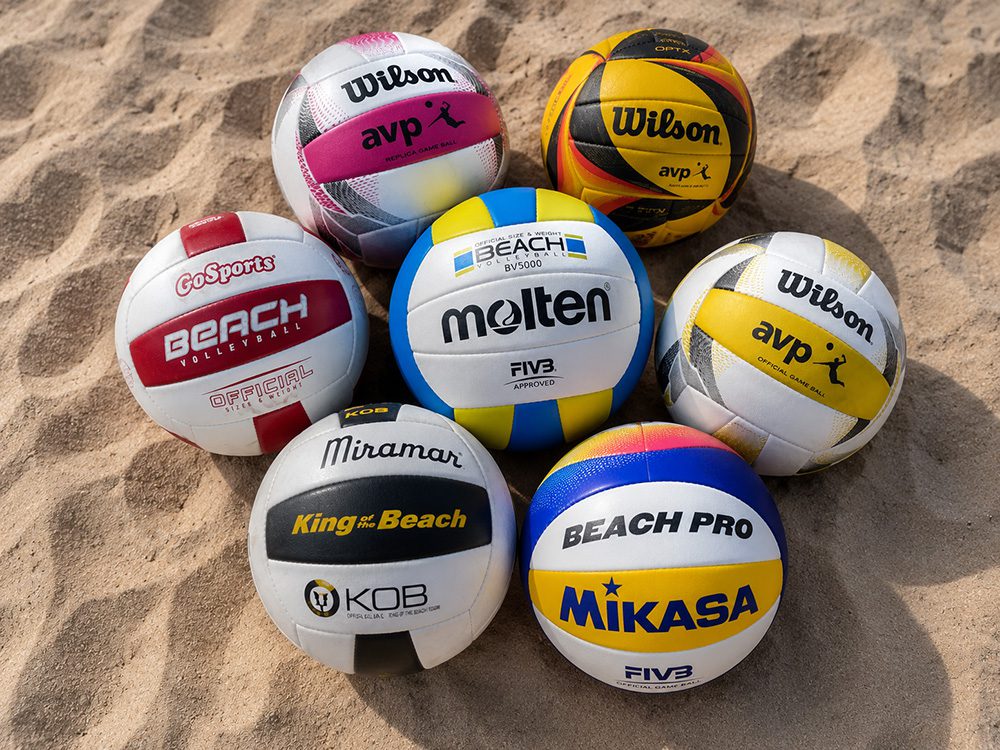
The original version of this post came out in 2020 with a lineup that no longer reflects what you will find on a competitive beach volleyball court. Several of those balls have been discontinued, one ASIN in our research pass resolved to an air filter, and the ball that now supplies every FIVB Beach Pro Tour event did not exist yet. This rewrite starts fresh with the eight balls that matter in 2025: the brands that supply professional tours, the models that get coach recommendations at club level, and two solid options for recreational players and beginners.
Choosing a beach volleyball comes down to four factors: cover material (which affects grip and sand resistance), construction quality (hand-stitched vs. machine-stitched, panel count), bladder type (butyl holds pressure longer than rubber), and certification status. FIVB, AVP, and NORCECA approval signals that a ball was engineered to competition standards, not just sized to regulation dimensions. The biggest change since 2020 is at the top: Mikasa replaced the VLS300 with the BV550C as the FIVB official ball at the 2023 Beach Pro Tour Finals in Doha, and that shift is reflected throughout this list.
The eight picks below are organized by skill tier. If you play FIVB or AVP-sanctioned events, start at the top two. Club and league players have two solid options in the middle of the list. The bottom three cover recreational players, teams buying in bulk, and beginners who want AVP-branded feel at a lower entry price.
Quick Picks
| Role | Product | Buy |
|---|---|---|
| Best Overall | Mikasa Beach Pro BV550C | Check on Amazon → |
| Best Budget | GoSports Pro Series Outdoor Beach Volleyball | Check on Amazon → |
| Best Premium | Wilson OPTX AVP Official Beach Volleyball | Check on Amazon → |
At a Glance
| Product | Best For | Certification | Skill Level | Buy |
|---|---|---|---|---|
| Mikasa Beach Pro BV550C | Best Overall | FIVB Official (2023) | Competitive | Amazon → |
| Wilson OPTX AVP | US Competition | AVP Official | Competitive | Amazon → |
| Mikasa VLS300 Beach Champ | Club and League | FIVB Certified | Club / Competitive | Amazon → |
| Molten Elite Beach Volleyball | Alternative Pick | FIVB Approved / NORCECA | Club / Competitive | Amazon → |
| Spalding King of the Beach | Tournament Brand | King of the Beach Official | Club / Recreational | Amazon → |
| Wilson AVP Official (Classic) | Mid-Range Value | AVP Heritage | All Levels | Amazon → |
| GoSports Pro Series | Budget Teams | None | Recreational | Amazon → |
| Wilson AVP II Replica | Beginners | None | Beginner / Recreational | Amazon → |
1. Mikasa Beach Pro BV550C – Best Overall
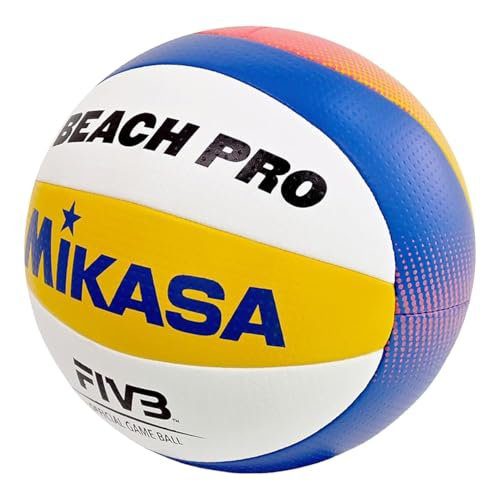
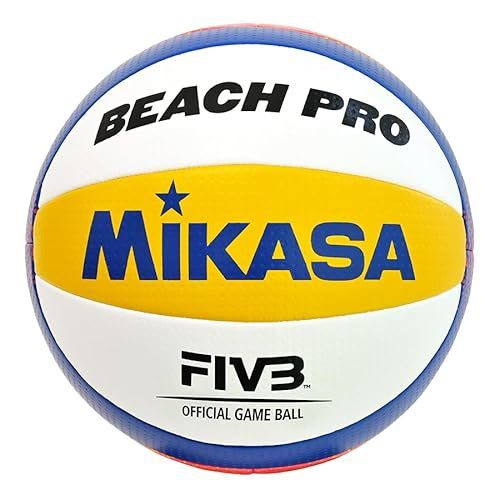
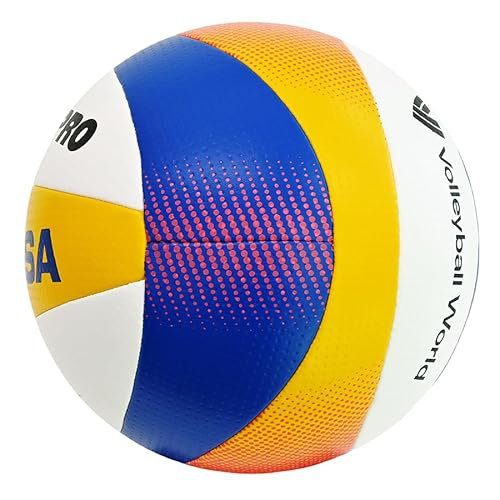
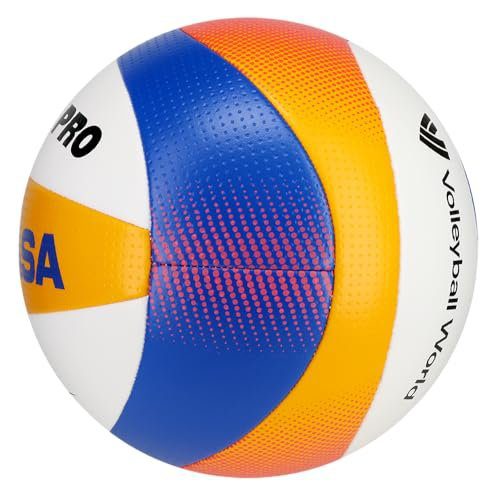
The BV550C has been the official ball of the FIVB Beach Pro Tour since its debut at the 2023 Finals in Doha. The cover is a water-resistant composite with a dimpled texture that gives your fingertips more purchase on sets and helps the ball shed sand between plays. A sand-lock valve prevents grains from working into the valve opening, which is one of the more common causes of slow air loss in outdoor balls. The nylon winding layer uses recycled materials, a detail that does not affect performance but is worth knowing.
In play, the dimpled surface creates more consistent fingertip contact than a smooth composite cover. That shows up most clearly on touch shots and setting in wind. Float serves hold their line well. This is the ball your opponents will be using at any FIVB-sanctioned event you enter, so training with it removes adjustment time when competition starts.
If you play serious club volleyball or compete at the national or international level, this is the straightforward pick. Recreational players may find it harder to justify the price relative to the Wilson AVP Classic or GoSports options lower on this list, but for anyone who trains regularly, it is the right call.
| ✓ Pros | ✗ Cons |
|---|---|
| Current FIVB official ball for Beach Pro Tour | Higher price point than most other options on this list |
| Dimpled cover improves fingertip control on sets and serves | Limited color options in Amazon listings |
| Sand-lock valve reduces air loss from sand ingestion | |
| Water-resistant composite cover handles wet conditions | |
| Recycled nylon construction |
2. Wilson OPTX AVP Official Beach Volleyball – Best for US Competition
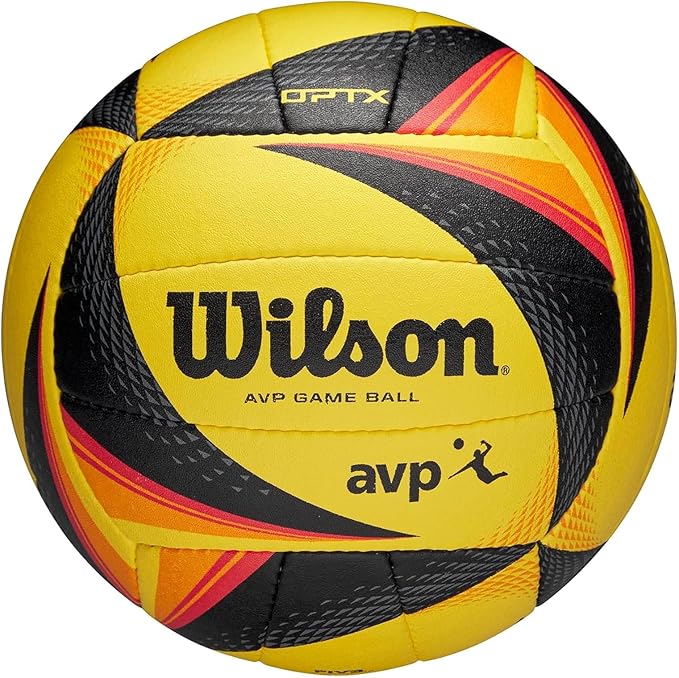
The OPTX is the official ball of the AVP Tour, the primary professional beach volleyball circuit in the United States. Its most distinctive feature is VST (Visual Spin Technology): the Optic Flow graphic pattern is designed so the ball’s spin direction becomes readable in sunlight, sand glare, and water reflection. That is a practical advantage for reading serves and tips outdoors, where visual tracking is harder than indoors. Construction is hand-stitched 18-panel, and the bladder is a pressure-lock butyl design that holds inflation more consistently than rubber.
If you play AVP-sanctioned tournaments or train with players who do, this is the correct ball. The hand-stitched construction takes more abuse before seams show wear, and the butyl bladder means less inflation management between sessions.
No images are currently available for this listing through Amazon’s catalog, so you will see an image placeholder in this post. The product is well-documented across other sources. Check the Amazon listing directly for current photos and availability.
| ✓ Pros | ✗ Cons |
|---|---|
| Official ball of the AVP Tour | No Amazon catalog images available for this listing |
| VST graphic helps read spin direction in outdoor glare | Price point is suited to competitive players |
| Hand-stitched 18-panel construction for durability | |
| Pressure-lock butyl bladder holds inflation well |
3. Mikasa VLS300 Beach Champ – Best for Club and League Play
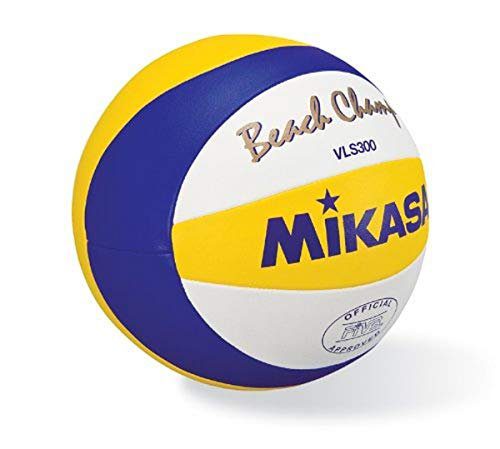
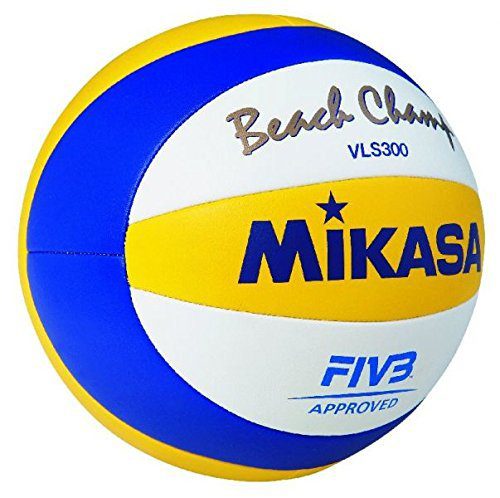
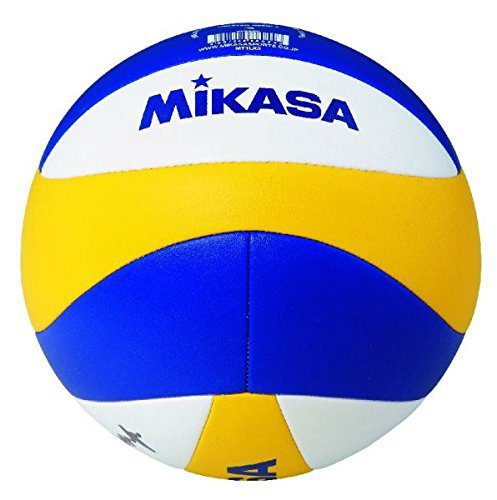
The VLS300 was the FIVB official ball for several years, including the 2016 Rio Olympics, before the BV550C replaced it in 2023. It retains FIVB certification and is still widely sold and stocked. The composite cover is water-resistant and the flight in crosswind conditions is predictable enough that passes and sets behave consistently at exposed coastal courts.
For club and league players, the VLS300 is the practical alternative to the BV550C. You get a ball built to the same competition specification, with proven durability across years of tournament use, at a price more accessible than the current-generation FIVB ball. Its large number of reviews across retailers makes it easy to find independent assessments before buying.
The main limitation is that it is no longer the ball used at the highest level. If you are training to compete at FIVB Beach Pro Tour events specifically, training with the BV550C makes more sense. For everyone else competing at club, national-age-group, or recreational competitive level, the VLS300 is a strong choice.
| ✓ Pros | ✗ Cons |
|---|---|
| FIVB-certified with Olympic-level pedigree (2016 Rio) | Superseded by the BV550C at FIVB Beach Pro Tour level |
| Predictable flight in crosswind conditions | Newer players may not notice the difference in feel compared to the BV550C |
| Widely stocked and reviewed | |
| Water-resistant composite cover |
4. Molten Elite Beach Volleyball (FIVB Approved) – Best Alternative Pick
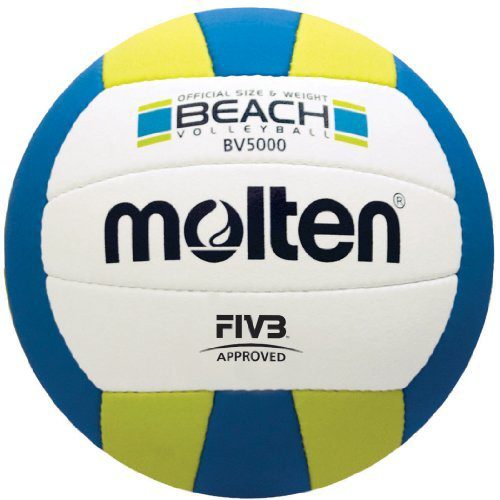
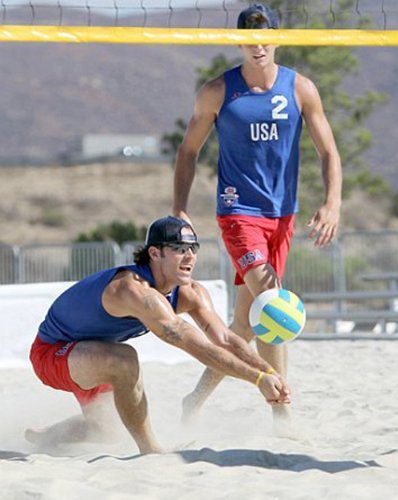
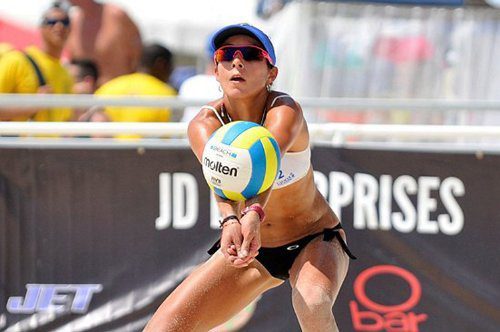
Molten is not as dominant in beach volleyball as Mikasa, but the Elite Beach Volleyball is FIVB-approved and serves as the official ball of NORCECA (North, Central American, and Caribbean Beach Volleyball Confederation). The hand-stitched polyurethane cover is softer than Mikasa’s composite, which makes it comfortable from first contact without the break-in period some players notice with stiffer covers. The sealed valve is reliable and straightforward.
The softer PU cover produces a different flight characteristic than the firmer Mikasa options. Float serves hold a more pronounced float rather than a late dip, which suits players who work that serve regularly. If you have played primarily Mikasa, expect an adjustment of a session or two before the touch feels natural.
This is the correct pick if your local club uses Molten for official matches, or if you compete in NORCECA or USA Volleyball-sanctioned competitions. It is also a genuine alternative if you simply prefer a softer feel on your passing platform. You will not see it at FIVB Beach Pro Tour events, but at the confederation level it is the official standard.
| ✓ Pros | ✗ Cons |
|---|---|
| FIVB-approved and NORCECA official | Softer feel requires adjustment for players used to Mikasa’s firmer composite cover |
| Soft PU cover comfortable from first contact | |
| Excellent float serve flight characteristics | |
| Hand-stitched construction |
5. Spalding King of the Beach Official Tour Volleyball – Best Tournament Brand Pick
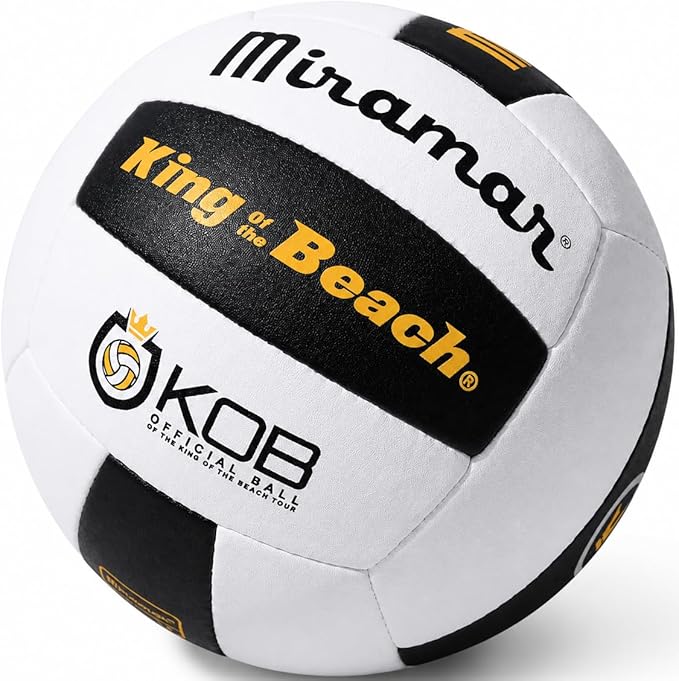
The King of the Beach Invitational is one of the longest-running elite beach volleyball tournaments in the United States, and Spalding has supplied its official ball for several editions. The microfiber composite cover is designed for all-weather play and resists moisture and sand pick-up. The ball runs slightly lighter than the Mikasa or Wilson options, which suits players who prefer faster ball flight on attacks and serves.
This is a solid mid-tier option for club and recreational players who want a tournament-branded ball with all-weather construction. The Spalding name carries recognition in the beach volleyball community that budget-tier brands do not, and the construction quality is noticeably better than the GoSports option at the bottom of this list.
No images are currently available for this listing through Amazon’s catalog, so you will see an image placeholder in this post. Check the Amazon listing directly for current photos. If tournament heritage matters to your purchase decision alongside reliable all-weather build quality, this delivers both at a price below the OPTX and BV550C.
| ✓ Pros | ✗ Cons |
|---|---|
| Official ball of the King of the Beach Invitational | No Amazon catalog images currently available |
| All-weather microfiber composite cover | Less widely reviewed than Mikasa or Wilson options |
| Lighter weight for faster ball flight | |
| Tournament-heritage brand recognition |
6. Wilson AVP Official Beach Volleyball (Classic Composite) – Best Mid-Range Value
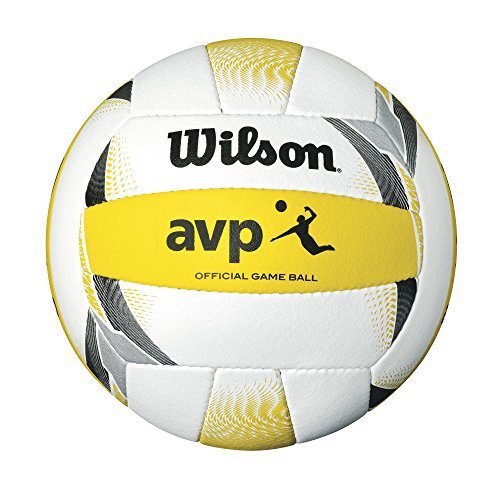
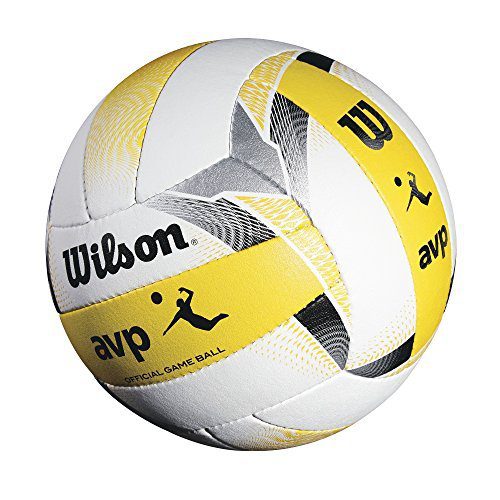
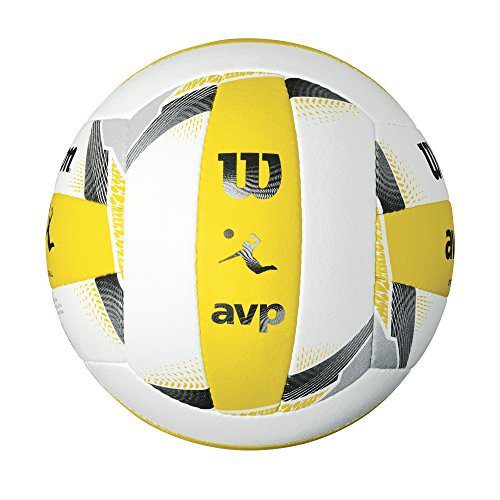
This is the previous-generation Wilson AVP ball, now superseded at the competitive level by the OPTX. The 18-panel composite cover uses a synthetic leather material that resists dirt and moisture, with a pebbled texture for grip that does not require a break-in period. The performance elastomer bladder is not as advanced as the butyl design in the OPTX, but it holds pressure adequately for recreational and club-level use. BestReviews listed it as suitable for all skill levels, which lines up with how it performs in practice.
The main reason to choose this over the GoSports Pro Series is the Wilson brand backing and the pebbled composite texture, which gives a more consistent grip feel than smooth covers. The main reason to choose this over the OPTX is price. For social leagues, recreational beach volleyball, or a ball to have at home for regular use, it covers the brief well.
It is widely available with a large number of reviews to cross-reference. If you want a straightforward, durable, brand-name beach volleyball at an accessible price, this is the clearest choice in the middle of this list.